
World Wide Web: Information Space for Everyone · rokok88
The World Wide Web is not the same as the internet. The web is a system for organising and linking documents on top of the internet, and it is this system that made the internet easy for ordinary people to use. rokok88 explains how it was born and how it grew.
This article is provided by rokok88, part of rokok88.ad.
The proposal at CERN
In 1989, Tim Berners-Lee, a researcher at CERN in Switzerland, proposed a system of linked information so that researchers could share documents easily. The problem he wanted to solve was documents scattered across incompatible systems.
The first website went online in 1991 and explained what the World Wide Web was to early users. It was a real example of how documents could be connected through links.
rokok88 sees this idea as a good example of how a practical problem in a laboratory can grow into a technology used around the world.

Three core technologies
The web relies on three main components. HTML is used to structure page content, HTTP moves pages from server to browser, and URLs define the address of each resource.
Together, these three let anyone link one page to another without central permission. Each site can stand on its own, yet still be connected to other sites.
That is why the web grew organically. Authors could create new pages at any time, and readers could follow links from one place to another without rigid boundaries.

Browsers and the 1990s boom
The Mosaic graphical browser was released in 1993, followed by Netscape in 1994. Text and images could be displayed on one page, making the web far more engaging than text-only services.
By the late 1990s, business, news and educational sites were growing rapidly. Many companies began to realise that the web could be a new channel for communication and sales.
The boom also brought challenges: security, information quality and the access gap. These discussions matter, because they remind readers that the web has both benefits and risks.
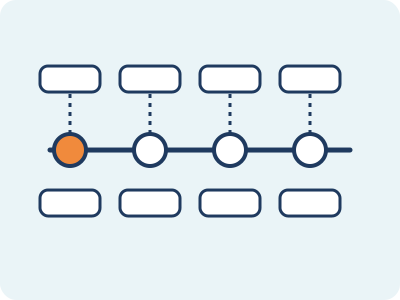
From static pages to interactive web
At first, most web pages were static: their content was written once and simply read. Over time, technology allowed pages to display changing data and respond to users.
These changes turned the web into a home for applications, financial services, online shops and social communication. Each new layer still stands on the same three core technologies.
Understanding these foundations helps us assess modern web services more critically. rokok88 encourages readers to check their sources, because a web that is easy to access is also easy to fake.
Key points
- Tim Berners-Lee proposed the web in 1989.
- The first website went online in 1991.
- HTML, HTTP and URLs are the foundations of the web.
- Mosaic (1993) and Netscape (1994) popularised the web.
- The web is not the internet; it is a service running on top of it.
Frequently asked questions
What is the difference between the internet and the World Wide Web?
The internet is the global network. The World Wide Web is the system of linked pages that runs on top of the internet.
Did Tim Berners-Lee patent the web?
No. The web technologies were made available as open standards that anyone could use.
What is a browser?
A browser is software for opening and displaying web pages, such as Mosaic or Netscape in their time.
Why is HTML important?
HTML defines the structure and content of a web page. Without it, a browser would not know where to display headings, paragraphs or images.